
Inventory management software and processes allow for real-time updating of the inventory count. Often, this means employees use barcode scanners to record sales, purchases or returns at the moment they happen. Employees feed this information into a continually adjusted database that tracks each change. The automatic, or perpetual, updating of the inventory is what gives the system its name and differentiates it from the periodic approach. The FIFO reserve, often called the LIFO reserve, keeps track of differences in accounting for inventory when a company utilizes a FIFO method or LIFO method. Sometimes, companies will opt to use FIFO internally because it shows the physical flow of goods.
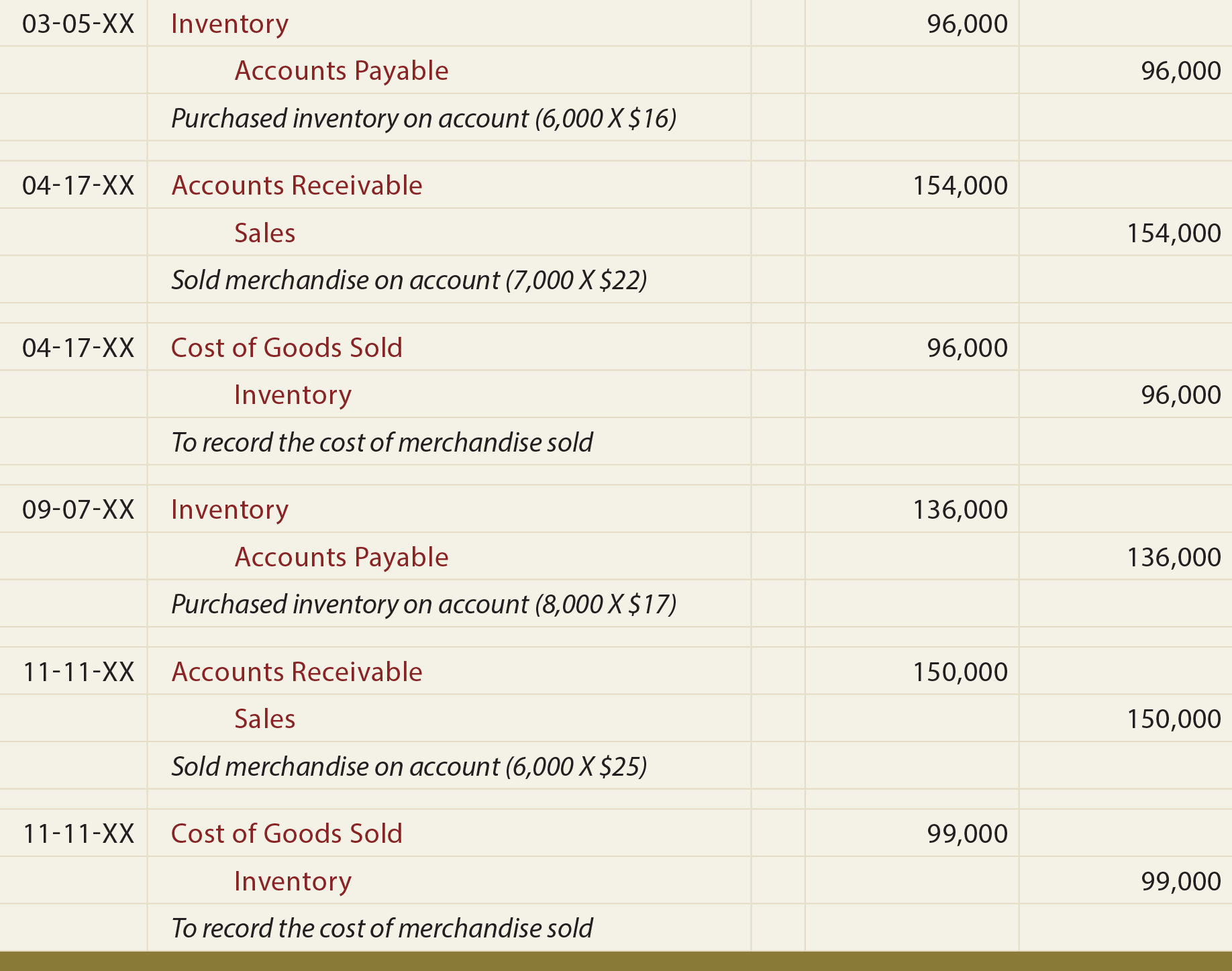
This card shows the starting inventory, sales, purchases, prices and balances. Under a perpetual system, inventory records for this product are continually changing. When the company sells merchandise, the perpetual software records two transactions. First, the software credits the sales account and debits the accounts receivable or cash. Second, the software debits the COGS for the merchandise and credits the inventory account.
Make sure to check out our videos on FIFO inventory calculations video and FIFO inventory journal entries at the end of the post. When I think of FIFO, it reminds me of milk being sold at the grocery store. Inventory is valued at cost unless it is likely to be sold for a lower amount. The first guitar was purchased in January for $40.The second guitar was bought in February for $50.The third guitar was acquired in March for $60.
FIFO (first-in, first-out) is a cost flow assumption that businesses use to value their stock where the first items placed in inventory are the first items sold. So the inventory left at the end of the period is the most recently purchased or produced. All periodic inventory systems calculate inventory at the end of when to use a debit vs credit card the period. Therefore, we are not concerned about which units are on hand when a sale occurs. When calculating any inventory method under periodic, it is best to separate the purchases from the sales. The goal of using the WAC is to give every inventory item a standard average price when you make a sale or purchase.

Because the value of ending inventory is based on the most recent purchases, a jump in the cost of buying is reflected in the ending inventory rather than the cost of goods sold. The example above shows how a perpetual inventory system works when applying the FIFO method. When using the perpetual system, the Inventory account is constantly (or perpetually) changing. The outcomes for gross margin, under each of these differentcost assumptions, is summarized in Figure 10.21. Figure 10.18 shows the gross margin resulting from the LIFOperpetual cost allocations of $7,380. Figure 10.16 shows the gross margin, resulting from the FIFOperpetual cost allocations of $7,200.
If we take 100 units out of inventory, we would take them from beginning inventory. Our example has a four-day period, but we can use the same steps to calculate the ending inventory for a period of any duration, such as weeks, months, quarters, or years. Under the FIFO Method, inventory acquired by the earliest purchase made by the business is assumed to be issued first to its customers.
This is because even though we acquired 30 units at the cost of $4 each the same day, we have assumed that the sales have been made from the inventory units that were acquired earlier for $5 each. In other words, the costs to acquire merchandise or materials are charged against revenues in the order in which they are incurred. The specific identification costing assumption tracks inventoryitems individually so that, when they are sold, the exact cost ofthe item is used to offset the revenue from the sale. The cost ofgoods sold, inventory, and gross margin shown in Figure 10.13 were determined from the previously-stated data,particular to specific identification costing.
Perpetual inventory allows for more real-time inventory tracking, making it superior to other methods. However, the system requires consistent record-keeping and monitoring and is more expensive to set up than other methods. Suppose it’s impossible or impractical for a company to understand the impact of switching from FIFO to LIFO.
accutane costhttp://www.canadianpharmacy365.org/clomidbuy ambien